Books by splitShops
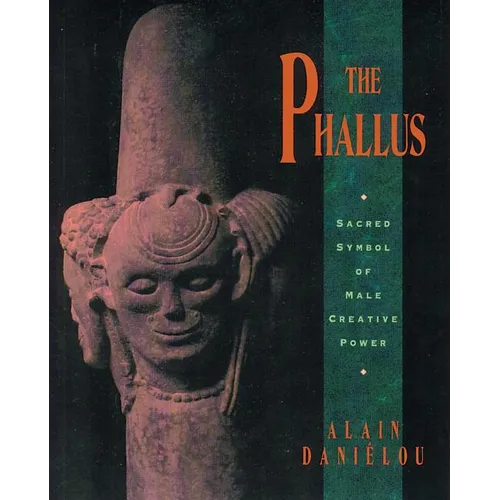
The Phallus: Sacred Symbol of Male Creative Power - Paperback
The Phallus: Sacred Symbol of Male Creative Power - Paperback
Couldn't load pickup availability
by Alain Daniélou (Author)
Beginning with an overview of the symbolism of creative forces in general, The Phallus first examines the representation of male fertility in such forms as the menhirs or standing stones of prehistoric Europe; the Mahalinga and Svayambhu of India; and the ancient Greek Omphalos. The second part of the book surveys the presence of ithyphallic gods in archaic shamanistic religions (the Lord of the Animals), the Greek pantheon (Hermes, Priapus), and the Hindu deities (Ardhanarishvara, the androgyne). Danielou also explores the role of Shaivist and Dionysian initiatory rites in bringing men into communion with the creative forces of life. Illustrated throughout with photographs and line drawings of European and Indian art, The Phallus celebrates the expression of the masculine in the religious traditions of East and West.
Phallic imagery, in one form or another, may be found in the artistic traditions of virtually every world culture since prehistoric times. Alain Danielou here unveils the religious impulse underlying art that at first glance seems to have no purpose beyond the erotic.Back Jacket
SEXUALITY / ART Worship of the phallus as a symbol of creative energy has been central to virtually every world culture, and strong traditions of phallic art exist throughout India, Egypt, Greece, and Northern Europe. Yet we in the West, hampered by modern taboos, have been unable to see this most fundamental of symbols for what it is--the image of the creator in mankind. Alain Danielou, the foremost authority on the art and spirituality of India and the classical world, here unveils the religious impulse underlying art that at first seems purely erotic. The Phallus surveys a wide range of art, myth, and cultural customs, examining phallic amulets of Neolithic man, standing stones of Europe, the mukha lingam of India, the obelisks of Rome and Egypt, and other representations of male fertility. Danielou shows the primal role played by ithy-phallic gods in such diverse mythologies as those of the Celts (Cernunnos, the Horned God), Greeks (Pan, Hermes, Priapus), and Hindus (Ardhanarishvara, the androgyne). He also explores the cults of Shiva and Dionysus in their role of bringing men into the communion with the creative forces of life. It is in this capacity--as a manifestation of the creator, a source of bliss and transcendence--that the phallus has its most powerful role in human symbolism. And, Danielou argues, if we are to maintain our link to the divine, it must assume this symbolic role again. Profusely illustrated with some of the world's finest examples of phallic art, The Phallus celebrates the expression of the masculine in the religious traditions of East and West. Dancer, musician, and scholar, ALAIN DANIeLOU (1907-1994) wrote more than thirty books about the philosophy, religion, and art of India and the Mediterranean. Following a series of successful careers, Danielou settled in India and spent fifteen years in the study of sanskrit, philosophy, and music. After numerous university appointments in India, he returned in 1963 to Europe, where he established the Institute of Comparative Music Studies. Danielou's other books include The Complete Kama Sutra; Gods of Love and Ecstasy; Myths and Gods of India; and Virtue, Success, Pleasure, and Liberation.
Author Biography
Alain Daniélou (1907-1994) wrote more than thirty books about the philosophy, religion, history, and arts of India and the Mediterranean. Following a series of successful careers as a dancer, musician, and composer (Cocteau, Diaghilev, and Stravinsky were among his friends), Daniélou settled in India and spent fifteen years there in the study of Sanskrit, philosophy, and music. After numerous university appointments in India, he returned in 1963 to Europe, where he established the Institute of Comparative Music Studies. Daniélou's other books include The Complete Kama Sutra; Gods of Love and Ecstasy; Myths and Gods of India; and Virtue, Success, Pleasure, and Liberation.
Share