Books by splitShops
Urban Crime Control in Cinema: Fallen Guardians and the Ideology of Repression - Hardcover
Urban Crime Control in Cinema: Fallen Guardians and the Ideology of Repression - Hardcover
Couldn't load pickup availability
by Vladimir Rizov (Author)
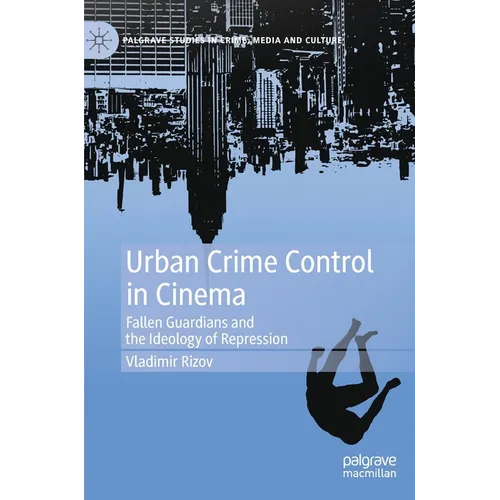
This book uses popular films to understand the convergence of crime control and the ideology of repression in contemporary capitalism. It focuses on the cinematic figure of the fallen guardian, a protagonist who, in the course of a narrative, falls from grace and becomes an enemy of the established social order. The fallen guardian is a figure that allows for the analysis of a particular crime control measure through the perspective of both an enforcer and a target. The very notion of 'justice' is challenged, and questions are posed in relation to the role that films assume in the reproduction of policing as it is. In doing so, the book combines a historical far-reaching perspective with popular culture analysis. At the core remains the value of the cinematic figure of the fallen guardian for contemporary understandings of urban space and urban crime control and how films are clear examples of the ways in which the ideology of repression is reproduced.
This book questions thejustifications that are often given for social control in cities and understands cinema as a medium for offering critique of such processes and justifications. Explored are the crime control measures of private policing in relation to RoboCop (1987), preventative policing and Minority Report (2002), mass incarceration in The Dark Knight Rises (2012), and extra-judicial killing in Blade Runner 2049 (2017). The book speaks to those interested in crime control in critical criminology, cultural criminology, urban studies, and beyond.
Back Jacket
This book uses popular films to understand the convergence of crime control and the ideology of repression in contemporary capitalism. It focuses on the cinematic figure of the fallen guardian, a protagonist who, in the course of a narrative, falls from grace and becomes an enemy of the established social order. The fallen guardian is a figure that allows for the analysis of a particular crime control measure through the perspective of both an enforcer and a target. The very notion of 'justice' is challenged, and questions are posed in relation to the role that films assume in the reproduction of policing as it is. In doing so, the book combines a historical far-reaching perspective with popular culture analysis. At the core remains the value of the cinematic figure of the fallen guardian for contemporary understandings of urban space and urban crime control and how films are clear examples of the ways in which the ideology of repression is reproduced.
This book questions the justifications that are often given for social control in cities and understands cinema as a medium for offering critique of such processes and justifications. Explored are the crime control measures of private policing in relation to RoboCop (1987), preventative policing and Minority Report (2002), mass incarceration in The Dark Knight Rises (2012), and extra-judicial killing in Blade Runner 2049 (2017). The book speaks to those interested in crime control in critical criminology, cultural criminology, urban studies, and beyond. Vladimir Rizov is Senior Lecturer in Criminology at the University of Winchester, UK. He researches the history of documentary photography in relation to urban studies, the development of video game photography, and the cinematic representation of crime control. His work has been published in CITY, Theory, Culture & Society, The Journal of Aesthetic Education, and Journal of Urban History.Author Biography
Vladimir Rizov is Senior Lecturer in Criminology at the University of Winchester, UK. He researches the history of documentary photography in relation to urban studies, the development of video game photography, and the cinematic representation of crime control. His work has been published in CITY, Theory, Culture & Society, The Journal of Aesthetic Education, and Journal of Urban History.
Share